
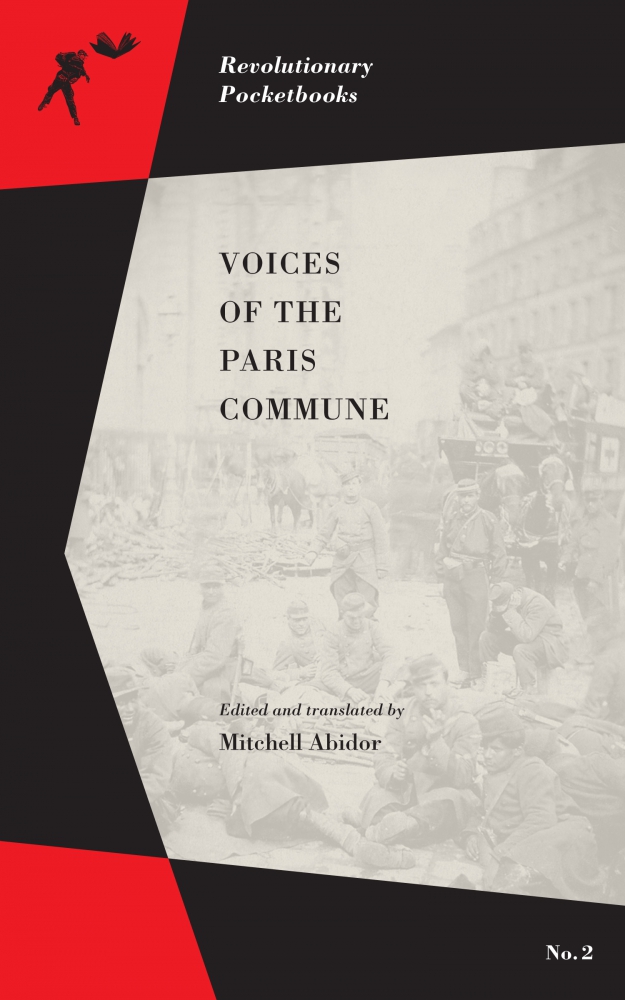
Voices of the Paris Commune
Please select all options before adding to cart.
The Paris Commune of 1871, the first instance of a working-class seizure of power, has been subject to countless interpretations; reviled by its enemies as a murderous bacchanalia of the unwashed while praised by supporters as an exemplar of proletarian anarchism in action. As both a successful model to be imitated and as a devastating failure to be avoided. All of the interpretations are tendentious. Historians view the working class’s three-month rule through their own prism, distant in time and space. Voices of the Paris Commune takes a different tack. In this book only those who were present in the spring of 1871, who lived through and participated in the Commune, are heard.
The Paris Commune had a vibrant press, and it is represented here by its most important newspaper, Le Cri du Peuple, edited by Jules Vallès, member of the First International. Like any legitimate government, the Paris Commune held parliamentary sessions and issued daily printed reports of the heated, contentious deliberations that belie any accusation of dictatorship. Included in this collection is the transcript of the debate in the Commune, just days before its final defeat, on the establishing of a Committee of Public Safety and on the fate of the hostages held by the Commune, hostages who would ultimately be killed.
Finally, Voices of the Paris Commune contains a selection from the inquiry carried out twenty years after the event by the intellectual review La Revue Blanche, asking participants to judge the successes and failures of the Paris Commune. This section provides a fascinating range of opinions of this epochal event.
Praise:
“The Paris Commune of 1871 has been the subject of much ideological debate, often far removed from the experiences of the participants themselves. If you really want to dig deep into what happened during those fateful weeks, reading these eyewitness accounts is mandatory.”
—Gabriel Kuhn, editor of All Power to the Councils! A Documentary History of the German Revolution of 1918–1919
“The Paris Commune holds a place of pride in the hearts of radicals—heroically created from the bottom up and tragically crushed by the forces of reaction. Yet, as this collection illustrates, the lessons of the Commune, as debated by the Communards themselves, are as enduring and vital as that briefly liberated society was inspiring.”
—Sasha Lilley, author of Capital and Its Discontents
About the Editor:
Mitchell Abidor is the principal French translator for the Marxists Internet Archive and has published several collections of his translations, including Anarchists Never Surrender: Essays, Polemics, and Correspondence on Anarchism by Victor Serge. He is currently working on translations of further unpublished works by Victor Serge and Daniel Guérin.
See and hear editor interviews, book reviews, and other news on Mitchell Abidor's page HERE
You May Also Like

Anarchists Never Surrender: Essays, Polemics, and Correspondence on Anarchism, 1908–1938
Anarchists Never Surrender anthologizes Serge’s previously unavailable texts on anarchism and fleshes out the portrait of this brilliant writer and thinker.
Death to Bourgeois Society: The Propagandists of the Deed
Death to Bourgeois Society tells the story of four young anarchists who were guillotined in France in the 1890s: Ravachol, Auguste Vaillant, Emile Henry, and the Italian immigrant Santo Caserio.
For a Libertarian Communism
Guérin not only provides a critique of the socialist and communist parties of his day, he analyzes some of the most fundamental and pressing questions with which all radicals must engage.
The Permanent Guillotine: Writings of the Sans-Culottes
This is an anthology of figures who expressed the will and wishes of this nascent revolutionary class, in all its rage, directness, and contradictoriness.
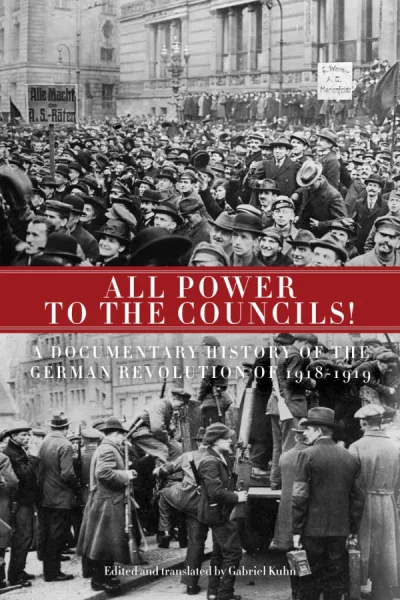
All Power to the Councils!: A Documentary History of the German Revolution of 1918-1919
Manifestos, speeches, articles, and letters from the German Revolution.

Outrage: An Anarchist Memoir of the Penal Colony
This is more than an historical document about the anarchist movement and the penal colony. It is a remarkable story of survival through self-determination, energy, courage, loyalty, and hope.

Anarchy, Geography, Modernity: Selected Writings of Elisée Reclus
A comprehensive introduction to the thought of this anarchist geographer and political theorist analyzing his sweeping historical and theoretical synthesis.

Demanding the Impossible: A History of Anarchism
Navigating the broad "river of anarchy," from Taoism to Situationism, from anarcho-syndicalists to anarcha-feminists, this volume is an authoritative and lively study of a widely misunderstood subject.