
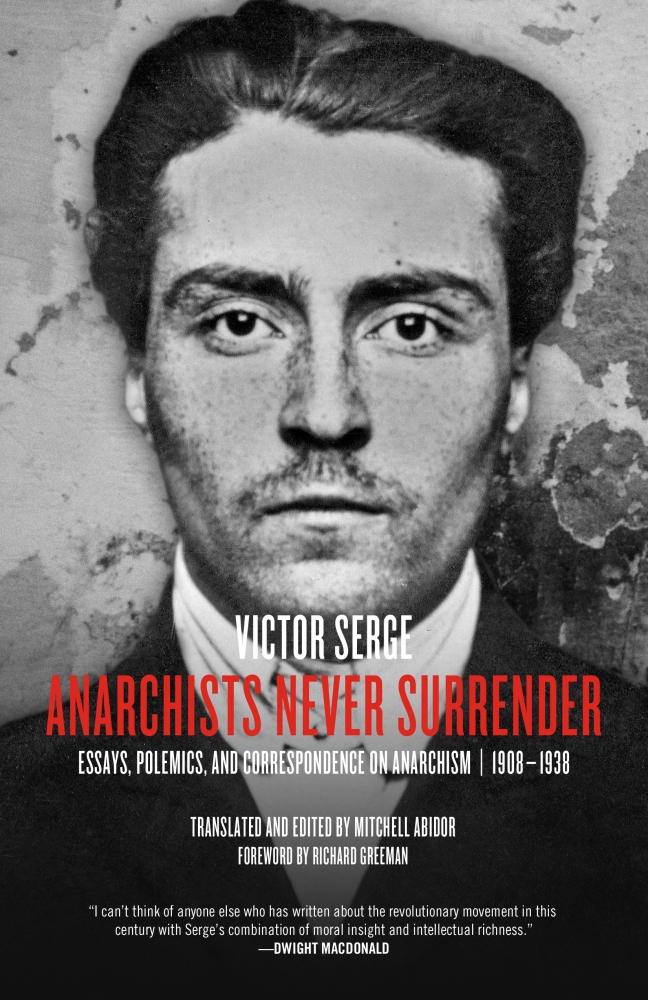
Anarchists Never Surrender: Essays, Polemics, and Correspondence on Anarchism, 1908–1938
Please select all options before adding to cart.
Anarchists Never Surrender provides a complete picture of Victor Serge's relationship to anarchism. The volume contains writings going back to his teenage years in Brussels, where he became influenced by the doctrine of individualist anarchism. At the heart of the anthology are key articles written soon after his arrival in Paris in 1909, when he became editor of the newspaper l'anarchie. In these articles Serge develops and debates his own radical thoughts, arguing the futility of mass action and embracing "illegalism." Serge's involvement with the notorious French group of anarchist armed robbers, the Bonnot Gang, landed him in prison for the first time in 1912. Anarchists Never Surrender includes both his prison correspondence with his anarchist comrade Émile Armand and articles written immediately after his release.
The book also includes several articles and letters written by Serge after he had left anarchism behind and joined the Russian Bolsheviks in 1919. Here Serge analyzed anarchism and the ways in which he hoped anarchism would leaven the harshness and dictatorial tendencies of Bolshevism. Included here are writings on anarchist theory and history, Bakunin, the Spanish revolution, and the Kronstadt uprising.
Anarchists Never Surrender anthologizes Victor Serge’s previously unavailable texts on anarchism and fleshes out the portrait of this brilliant writer and thinker, a man I.F. Stone called one of the “moral figures of our time.”
Praise:
“One of the most compelling of twentieth-century ethical and literary heroes.”
—Susan Sontag
“I can’t think of anyone else who has written about the revolutionary movement in this century with Serge’s combination of moral insight and intellectual richness.”
—Dwight Macdonald
“To me he has seemed a model of the independent intellectual in Europe between the wars: leftist but not dogmatic, political yet deeply involved with issues of cultural life, and a novelist of very considerable powers.”
—Irving Howe
“I believe indeed that to rescue the humanist tradition of the last decades is of the utmost importance, and that Victor Serge is one of the outstanding personalities representing the socialist aspect of humanism.”
—Erich Fromm
“Victor Serge died in exile and obscurity, apparently no more than a splinter of a splinter in the Marxist movement. But with the passage of the years, he looms up as one of the great moral figures of our time, an artist of such integrity and a revolutionary of such purity as to overshadow those who achieved fame and power. His failure was his success. I know of no participant in Russia’s revolution and Spain’s agonies who more deserves the attention of our concerned youth.”
—I.F. Stone
“I know of no other writer with whom Serge can be very usefully compared. The essence of the man and his books is to be found in his attitude toward the truth.... His life and its choices demonstrate an exemplary truth to which he was prophetically sensitive and which we should now accept as axiomatic. Institutions can be defended by lies, revolutions never.”
—John Berger, New Society
About the Contributors:
Victor Serge (1890–1947) was born to Russian anti-Tsarist exiles living in Brussels. As a young anarchist firebrand, Victor was sentenced to five years in a French penitentiary in 1912. In 1919, Serge joined the Bolsheviks. An outspoken critic of Stalin, Serge was expelled from the Party and arrested in 1929. Nonetheless, he managed to complete three novels (Men in Prison, Birth of Our Power, and Conquered City) and a history (Year One of the Russian Revolution), published in Paris. Arrested again in Russia and deported to Central Asia in 1933, he was allowed to leave the USSR in 1936 after international protests by militants and prominent writers like André Gide and Romain Rolland. Hounded by Stalinist agents, Serge lived in precarious exile in Brussels, Paris, Vichy France, and Mexico City, where he died in 1947.
Mitchell Abidor is the principal French translator for the Marxists Internet Archive and has published two collections of his translations, The Great Anger: Ultra-Revolutionary Writing in France from the Atheist Priest to the Bonnot Gang and Communards: The Story of the Paris Commune of 1871 as Told by Those Who Fought for It. He is currently working on translations of further unpublished works by Victor Serge and Daniel Guérin.
Richard Greeman is best known as the translator and prefacer of five of Victor Serge’s seven novels, most recently Men in Prison (PM Press). He is a founding member of the libertarian socialist Praxis Center in Moscow and Secretary of the Victor Serge Foundation, which supports the Victor Serge Libraries in Moscow and Kiev and underwrites translations and publication of Serge’s books in Russian and Arabic. Greeman has published literary, political, and biographical studies of Serge in English, French, Russian, and Spanish as well as prefaces to French editions of Serge’s books.
See and hear author interviews, book reviews, and other news on Victor Serge's page HERE
See and hear editor interviews, book reviews, and other news on Mitchell Abidor's page HERE
See and read more about Victor Serge on Richard Greeman's page HERE
You May Also Like
Death to Bourgeois Society: The Propagandists of the Deed
Death to Bourgeois Society tells the story of four young anarchists who were guillotined in France in the 1890s: Ravachol, Auguste Vaillant, Emile Henry, and the Italian immigrant Santo Caserio.
For a Libertarian Communism
Guérin not only provides a critique of the socialist and communist parties of his day, he analyzes some of the most fundamental and pressing questions with which all radicals must engage.

Godless: 150 Years of Disbelief
A compilation of wide-ranging texts, both hilarious and horrifying, on atheism, belief, and religion.
The Bonnot Gang: The Story of the French Illegalists, 2nd ed.
The Bonnot Gang were the most notorious French anarchists ever, and as bank expropriators the inventors of the motorized “getaway.” It is the story of how the anarchist taste for illegality developed into illegalism.
The Permanent Guillotine: Writings of the Sans-Culottes
This is an anthology of figures who expressed the will and wishes of this nascent revolutionary class, in all its rage, directness, and contradictoriness.
Voices of the Paris Commune
Voices of the Paris Commune presents the stories of those who lived through and participated in the Commune in the spring of 1871.
Men in Prison
Everything in this book is fictional and everything is true. I have attempted, through literary creation, to bring out the general meaning and human content of a personal experience.
Revolution and Other Writings: A Political Reader
The first comprehensive collection of Landauer's writings in English, a valuable addition to the history of anarchism.
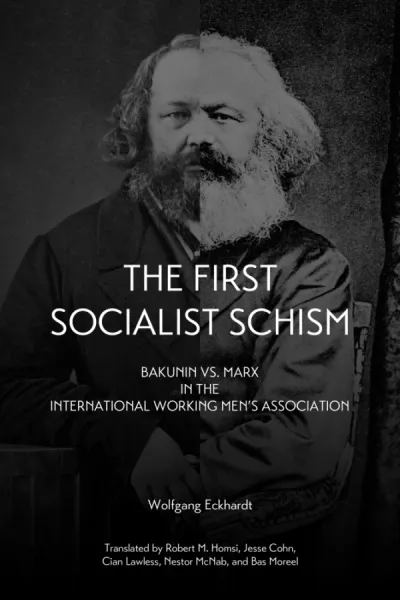
The First Socialist Schism: Bakunin vs. Marx in the International Working Men's Association
This book chronicles the conflicts in the International Working Men’s Association (First International) using source material from numerous archives and libraries that have gone unnoticed or were completely unknown.

Anarchy, Geography, Modernity: Selected Writings of Elisée Reclus
A comprehensive introduction to the thought of this anarchist geographer and political theorist analyzing his sweeping historical and theoretical synthesis.

Anarchist Seeds beneath the Snow: Left-Libertarian Thought and British Writers from William Morris to Colin Ward
Moving seamlessly from Aldous Huxley and Colin Ward to the war in Iraq, this challenging volume will energize leftist movements throughout the world.
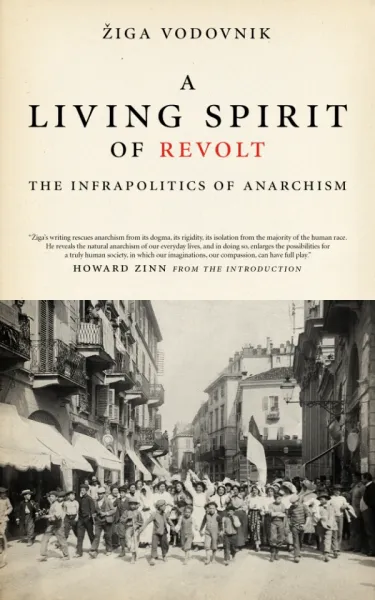
A Living Spirit of Revolt: The Infrapolitics of Anarchism
A Living Spirit of Revolt establishes that anarchism is today not only the most revolutionary current but, for the first time in history, the only one left.
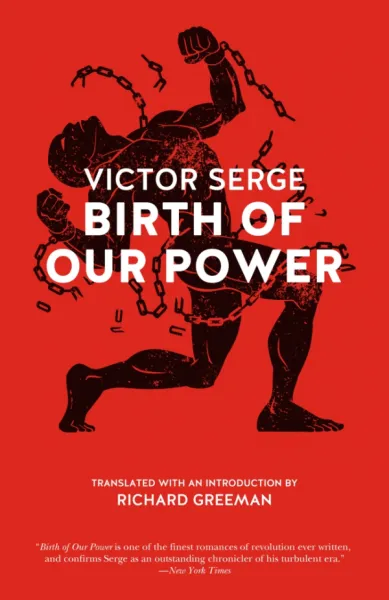
Birth of Our Power
This epic novel is set in Spain, France, and Russia during the heady revolutionary years 1917–1919. From "victory in defeat" to "defeat in victory."

Demanding the Impossible: A History of Anarchism
Navigating the broad "river of anarchy," from Taoism to Situationism, from anarcho-syndicalists to anarcha-feminists, this volume is an authoritative and lively study of a widely misunderstood subject.
Recently Viewed