
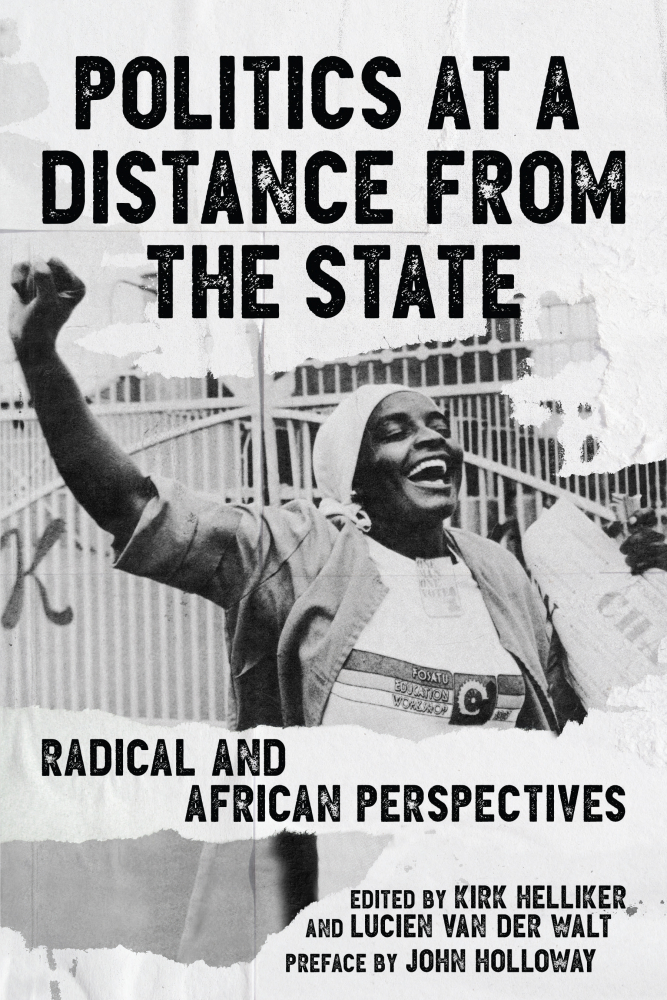
Politics at a Distance from the State: Radical and African Perspectives
Please select all options before adding to cart.
For decades, most anti-capitalist and anti-imperialist movements identified radical change with capturing state power. The collapse of statist projects from the 1970s fostered both neo-liberalism and a global crisis of left and working-class politics. But it also opened space for rediscovering democratic, society-centered, and anti-capitalist modes of bottom-up change, operating at a distance from the state. This resurgent alternative has influenced the Zapatistas in Mexico, Rojava in Syria, Occupy, and independent unions and struggles worldwide around austerity, land, and the city. Its lineages include anarchism, syndicalism, autonomist Marxism, philosophers like Alain Badiou, and popular praxis.
This pathbreaking volume helps recover this once sidelined politics, with a focus on South Africa and Zimbabwe. It includes a dossier of texts from a century of anarchists, syndicalists, radical unionists, and anti-apartheid activists in South Africa. Originating in an African summit of scholars, social movements, and anti-apartheid veterans, this book also features a preface from John Holloway.
Praise
“Yes, universities may produce assemblies which serve the people. So, in 2012 at Grahamstown, South Africa, did Rhodes University (despite the name), and in that service produced a people’s knowledge to transform the economic, material, social, family, political, educational, and spiritual institutions of capitalism at their core, without hierarchy, racism, oppression, or chauvinism of any kind. With sober care, practical acumen, and passionate eloquence the knowledge from that assembly is presented here. Absorb this knowledge and sense the future!”
—Peter Linebaugh, coauthor of The Many-Headed Hydra: Sailors, Slaves, Commoners and the Hidden History of the Revolutionary Atlantic (with Marcus Rediker)
“Capturing state power is regarded as the dominant means to achieving social transformation. This excellent collection challenges this prevailing perspective through examining societal and social movements in South Africa and Zimbabwe that have advocated and achieved tangible change from below without seizing state power. Kirk Helliker and Lucien van der Walt offer a compelling counternarrative that is indispensable to the literature on social movements.”
—Immanuel Ness, City University of New York, author of Organizing Insurgency: Workers’ Movements in the Global South
“Moving beyond the disillusion and cynicism engendered by liberation movements of the global South which ‘triumphed’ and then betrayed everything they professed to hold dear, the contributors to this volume explore what could happen when and if ‘bottom-up’ labor, gender, and livelihood social movements stop lusting after the capture of state power. Mainly based in South African and Zimbabwean studies, the authors construct an exciting dialogue with the ideas of Mexico-based sociologist and philosopher John Holloway. Can there really be independent survival strategies against the twin malignancies of late capitalism and state turgidity? This is a must-read about the scope and health of 21st-century social formations, trying to walk new paths of equitable human flourishing.”
—Teresa Ann Barnes, University of Illinois at Urbana-Champaign, author of Uprooting University Apartheid in South Africa: From Liberalism to Decolonization
“In the 1980s and ’90s, people who sought a world of equality, liberty, and socialism looked to Zimbabwe. In the late 1990s and early 2000s, after the fall of apartheid, even more looked towards South Africa. Tragically, the ruling parties in both countries—and which had led the liberation struggles in each—have proven epic failures and profound disappointments. Hence, it is high time to revisit historical social movements and more fully analyze recent ones that never placed their hopes in state power. This collection brings together fascinating research on the history of anarchist, community, rural, and worker movements from the early 20th century into the 21st that believe another world is possible.”
—Peter Cole, author of Ben Fletcher and Dockworker Power: Race and Activism in Durban and the San Francisco Bay Area
“In the light of the unfulfilled expectation of overcoming class and race inequality through state-centered national liberation movements and African state socialism this book edited by Kirk Helliker and Lucien van der Walt offers a fascinating insight into the seldom told history of alternative socialist currents in Southern Africa.”
—Dario Azzellini, Autonomous University of Zacatecas, Mexico, author of If Not Us, Who? Global Workers against Authoritarianism, Fascism and Dictatorships
“A must read for all people-centered movements aiming to transform society. This book could not have been written at a more opportune time, as ‘socialism’ returns to the world stage after a period of much disrepute and gross misinformation. It introduces us to past and present struggles in Southern Africa that do not see the capture of the state by vanguard parties as an adequate form of struggle., and that devise new ways to deal with the changes in capitalism.
—Zarina Patel, is editor of Awaaz magazine and author of The In-Between World of Kenya’s Media: South Asian Journalism, 1900–1992
“Time and again socialist movements have debated how best to achieve change. Some, like the anarchists and syndicalists, argued that it could only come from below, by means of working-class direct action, solidarity, and self-organization. The majority, with mainstream Marxists at the fore, argued that workers should take part in state politics and stand in elections. The judgment of history is clear: the former were right and, as predicted, rather the conquer state power, it conquered them. This excellent collection of essays brings a welcome South African and Zimbabwean perspective on this debate and will be interest to all those seeking to learn from history rather than repeat it.”
—Iain McKay, editor of Direct Struggle against Capital: A Peter Kropotkin Anthology
About the Authors
Kirk Helliker is research professor in sociology at Rhodes University, South Africa, and director of its Unit of Zimbabwean Studies. His books include the edited Everyday Crisis: Living in Contemporary Zimbabwe (2021) and the authored Fast Track Land Occupations in Zimbabwe in the Context of the Zvimurenga (2021), both in collaboration with Sandra Bhatasara and Manase Kudzai Chiweshe. He was deported by the apartheid regime.
Lucien van der Walt is a South African sociologist and labour educator, involved in the working-class movement. His research includes anarchism/syndicalism, working-class and left history, and neo-liberalism. He has been active in workers’ education since the 1990s, including for DITSELA, the National Union of Metalworkers of SA, the Vuyisile Mini Workers School, the Unemployed Peoples’ Movement, and the Red & Black Forums.
John Holloway is a professor of sociology at the Instituto de Ciencias Sociales y Humanidades in the Benemérita Universidad Autónoma de Puebla, Mexico. He has published widely on Marxist theory, on the Zapatista movement, and on the new forms of anti-capitalist struggle. His book Change the World Without Taking Power has been translated into eleven languages and has stirred an international debate. His other books include Crack Capitalism; We Are the Crisis of Capital: A John Holloway Reader; and In, Against, and Beyond Capitalism: The San Francisco Lectures.
Click here for one-page information sheet on this product
You May Also Like
A History of Pan-African Revolt
Originally published in England in 1938 (the same year as his magnum opus The Black Jacobins) and expanded in 1969, this work remains the classic account of global black resistance.
A Living Spirit of Revolt: The Infrapolitics of Anarchism
A Living Spirit of Revolt establishes that anarchism is today not only the most revolutionary current but, for the first time in history, the only one left.

Crossroads: I Live Where I Like: A Graphic History

No Gods, No Masters, No Peripheries: Global Anarchisms
A collection of essays on the questions of geographical and political peripheries in anarchist theory.
Reassessing the Transnational Turn: Scales of Analysis in Anarchist and Syndicalist Studies
This volume reassesses the ongoing transnational turn in anarchist and syndicalist study, a field where the interest in cross-border connections has generated innovative literature in the last decade.
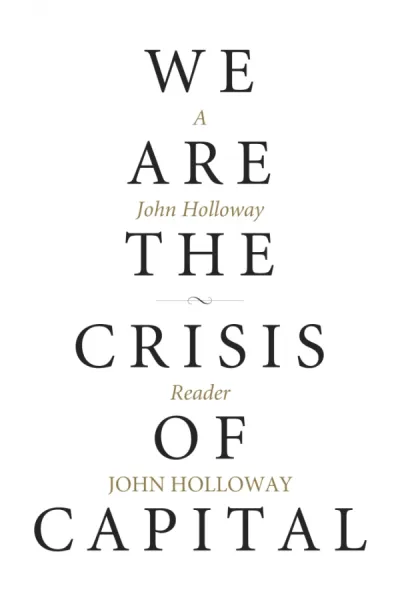
We Are the Crisis of Capital: A John Holloway Reader
We Are the Crisis of Capital collects articles and excerpts written by radical academic, theorist, and activist John Holloway over a period of forty years.