
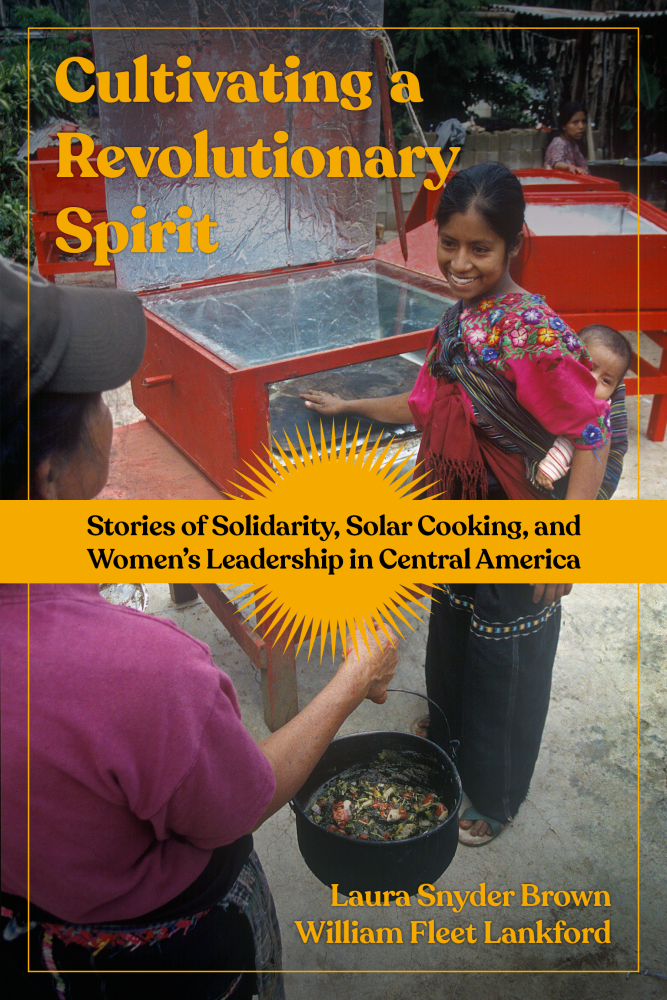
Cultivating a Revolutionary Spirit: Stories of Solidarity, Solar Cooking, and Women’s Leadership in Central America
Please select all options before adding to cart.
An exemplary story of solidarity in action, Cultivating a Revolutionary Spirit conveys the exhilarating experience of being part of paradigm-changing revolutions.
Bill Lankford visited Nicaragua in 1984 to see the Sandinista revolution for himself. What he found led this physics professor to volunteer his skills teaching at the National Autonomous University of Nicaragua. There, he and his students developed a solar cooking project which took on a life of its own, spreading throughout the five countries of Central America.
In Cultivating a Revolutionary Spirit, Bill describes how local women used the tools of carpentry to build solar ovens and how they used the tools of feminism to take more control over their own lives and their communities. Bill leveraged his personal resources as a white North American man—professionally educated, fluent in English, with access to money and connections—to facilitate the work of Central American women who started by building ovens and went on to create an array of projects to meet basic needs, improve health, and increase access to educational and leadership opportunities for women.
Praise
“This is a story of extraordinary commitment, deep solidarity, uncommon integrity, and humility—of learning about struggle and transformation from strong and courageous Central American women. Beautifully told. Hopeful. Rooted in reality.”
—Marie Dennis, senior adviser, and co-president (2007–19) of Pax Christi International, program chair of the Catholic Nonviolence Initiative, prolific author, most recently Choosing Peace: The Catholic Church Returns to Gospel Nonviolence
“A story about solar ovens in Central America that you can’t put down? That is exactly what Cultivating a Revolutionary Spirit is: a page-turner. It’s an endearing story about a US tenured physics professor, the inimitable Bill Lankford, who visited Nicaragua for two weeks in 1984 and stayed, in one form or another, for decades. It’s a heart-warming story about how organizations formed to spread solar ovens became vehicles for women to empower and defend themselves in repressive macho societies. But it’s also a refreshingly frank story about the ups and downs of organizations that depend on outsiders for financial support and guidance, and the ups and downs of organizations forced to ride the waves of enormous political upheavals. What the book does, in spectacular fashion, is convey a sense of compassion, admiration, and solidarity with the women of Central America that transcends organizations, cultures, and borders. It is, in essence, a beautiful love story.”
—Medea Benjamin, cofounder of CODEPINK: Women for Peace, prolific author, most recently War in Ukraine: Making Sense of a Senseless Conflict
“This is a story of women learning to cook with the sun during a time of revolution and social change. It takes us deep into the kitchens, lives, struggles and dreams of the women of Central America who harnessed the power of their solar ovens to cook, organize and empower themselves and their communities. It is the story of accompaniment and solidarity at its best; of walking with, listening, learning, and letting the women lead the way. Thank you for sharing this extraordinary journey—it shines!”
—Jennifer Atlee, Friendship Office of the Americas, author of Red Thread: A Spiritual Journal of Accompaniment, Trauma and Healing
“This riveting testimony conveys all the excitement of the Sandinista experience and the solidarity erupting among the poor throughout Central America as revolutionary zeal wrestled with the Goliath of military repression and US complicity. I could so identify with the many obstacles with keeping a women’s group going—the baggage each brings with her, family pressures, the huge MACHISMO, chronic illness, and exhaustion—and yet, the excitement of discovering like-minded women who wanted to give their all for the good of their community, their country. I am quite sure many of these women—and their daughters—are becoming leaders in the current shifts taking place in Central America.”
—Mary Judith Ress, eco-feminist activist, author of Ecofeminism in Latin America
“William Lankford’s incredible work with these amazing groups of women—empowered with new resources and solidarity—is inspiring to all of us engaged in social and environmental justice. While highlighting the successes of these solar oven projects, Bill also points out the social, economic, and cultural barriers faced by these women including his own limitation as an outsider ‘gringo’ male figure. The book is an honest and educational account of a project that went beyond solar ovens.”
—Shanta Nimbark Sacharoff, author of Other Avenues Are Possible: Legacy of the Peoples Food System of the San Francisco Bay Area
“The art of solidarity consists of providing necessary support while both staying involved and getting out of the way. Cultivating a Revolutionary Spirit provides a master class in how to do that wrapped in inspiring stories of women cooking up real change in Central America.”
—Sarah Shannon, executive director of Hesperian Health Guides, co-author of Health Actions for Women: Practical Strategies to Mobilize for Change
“In Cultivating a Revolutionary Spirit, William Lankford shares his experience of working with grassroots women’s groups in Central America, relevant to today’s continuing struggle against imperialism in the region. Lankford acknowledges that this work is done in the context of colonialism, the Monroe Doctrine, and decades of neoliberal anti-poor policies. His frank exploration of his own privilege and its outsized influence on the work is refreshing and necessary. It is unusual to encounter an outside organization that allows poor women to guide and mold development work, rather than hanging on to their First World concepts, and it is encouraging to follow Lankford’s journey to that place. His humble, self-reflective voice resonates and leaves one feeling that we do not walk this path alone, but rather together, as compañeros in struggle.”
—Becca Renk Foster, working in sustainable community development in Nicaragua for more than twenty years with the Jubilee House Community Center for Development in Central America
“It’s a joy to read an account from someone in the United States who has done a tremendous amount of good for people in Latin America, largely by learning from them and working with them, and who has educated many people back home about the destructive actions of their own government and the constructive projects of ordinary people. This book continues that educational service. Share it widely!”
—David Swanson, executive director of World Beyond War, author of many books including A Global Security System: An Alternative to War, and most recently, The Monroe Doctrine at 200 and What to Replace It With
About the Authors
Laura Snyder Brown has worked with community-based organizations for nearly three decades, supporting women and women-led justice efforts in the US, and in Central and South America. She holds a master’s degree in social work, is a graduate of the Living School at the Center for Action and Contemplation, and served with Maryknoll Lay Missioners (Chile, 2005). Laura is the co-founder of Casa Alma, a Catholic Worker community in Charlottesville, VA; there, she and her husband have raised three children while cultivating an urban homestead and providing hospitality for low-income families.
Born in Charlottesville, Virginia, William Lankford graduated in physics from the University of Virginia, received his PhD in nuclear physics from the University of South Carolina, and taught physics at George Mason University for 32 years. Midway through his career at George Mason, he was transformed by a study tour to Nicaragua, devoting increasingly more energy to the Central American solidarity movement. William taught introductory physics at the National Autonomous University of Nicaragua for two years, which led to a Fulbright to study the solar cooking project he developed there. Throughout the 1990s, Bill wrangled several semester-long leaves from GMU and spent every vacation for 20 years expanding the Central American Solar Energy Project (CASEP) to all five Central American countries, directing the organization through 2022.
You May Also Like
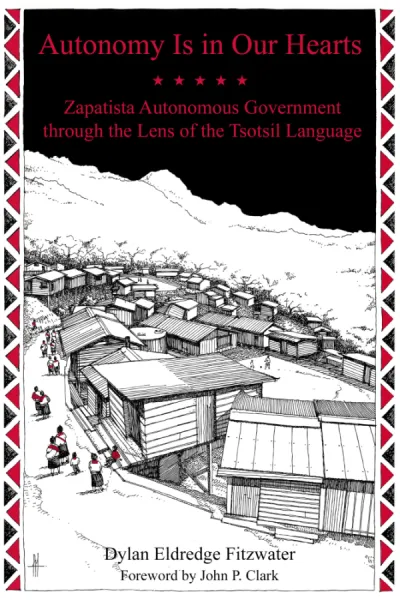
Autonomy Is in Our Hearts: Zapatista Autonomous Government through the Lens of the Tsotsil Language
Simultaneously an exposition of Tsotsil philosophy and a detailed account of Zapatista governance structures, this book is an indispensable commentary on the Zapatista movement of today.
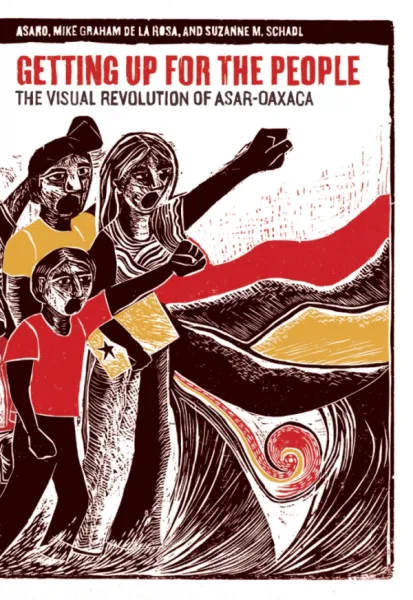
Getting Up for the People: The Visual Revolution of ASAR-Oaxaca
Presenting, in full color, the work of ASARO covering global themes of corporate greed, genetically modified organisms, violence against women, and abuses of natural resources.
Nourishing Resistance: Stories of Food, Protest, and Mutual Aid
Through essays, articles, poems, and stories, Nourishing Resistance argues that food is a central, intrinsic part of global struggles for autonomy and collective liberation.
Other Avenues Are Possible: Legacy of the People's Food System of the San Francisco Bay Area
Other Avenues Are Possible offers a vivid account of the dramatic rise and fall of the San Francisco People’s Food System of the 1970s.
Teaching Rebellion: Stories from the Grassroots Mobilization in Oaxaca
In 2006, in Oaxaca, what began as a teachers' strike demanding more resources for education quickly turned into a massive movement that demanded direct, participatory democracy.
Zapatista Stories for Dreaming Another World
Recently Viewed
Labor Law for the Rank and Filer: Building Solidarity While Staying Clear of the Law (2nd Edition)
A guerrilla legal handbook for workers in a precarious global economy.
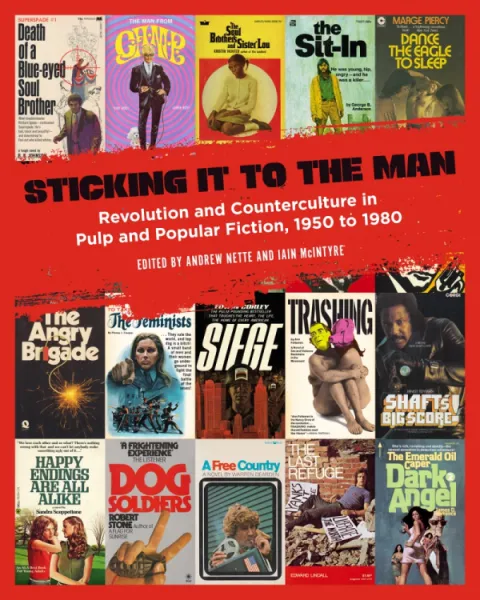
Sticking It to the Man: Revolution and Counterculture in Pulp and Popular Fiction, 1950 to 1980
This book tracks the changing politics and culture of the period and how it was reflected in pulp and popular fiction in the US, UK, and Australia from the 1950s, ’60s, and ’70s.
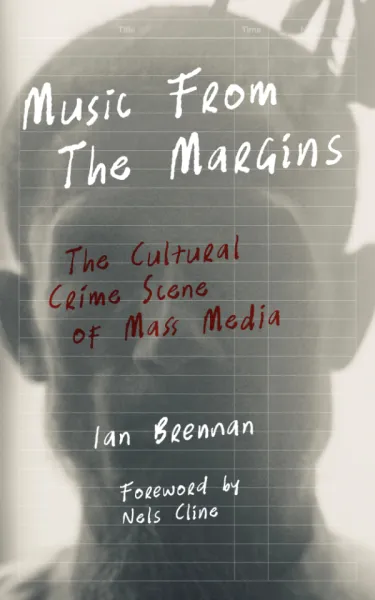
Music from the Margins: The Cultural Crime Scene of Mass Media
A passionate defense of listening itself, and a celebration of how denied and devalued voices are often the ones most worth hearing.