
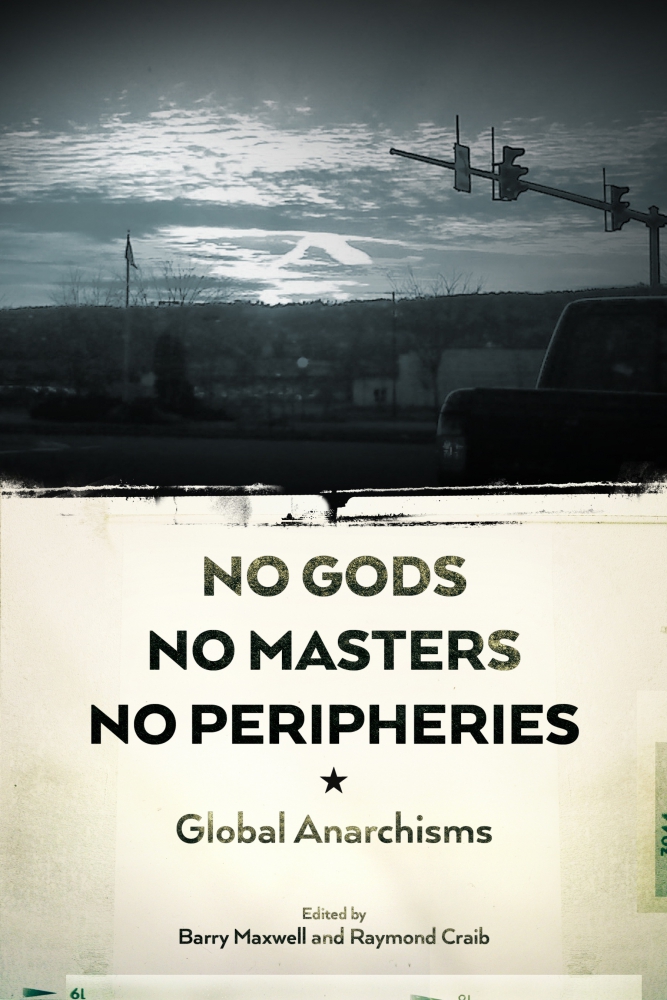
No Gods, No Masters, No Peripheries: Global Anarchisms
Please select all options before adding to cart.
Was anarchism in areas outside of Europe an import and a script to be mimicked? Was it perpetually at odds with other currents of the Left? The authors in this collection take up these questions of geographical and political peripheries. Building on recent research that has emphasized the plural origins of anarchist thought and practice, they reflect on the histories and cultures of the antistatist mutual aid movements of the last century beyond the boundaries of an artificially coherent Europe. At the same time, they reexamine the historical relationships between anarchism and communism without starting from the position of sectarian difference (Marxism versus anarchism). Rather, they look at how anarchism and communism intersected; how the insurgent Left could appear—and in fact was—much more ecumenical, capacious, and eclectic than frequently portrayed; and reveal that such capaciousness is a hallmark of anarchist practice, which is prefigurative in its politics and antihierarchical and antidogmatic in its ethics.
Copublished the with Institute for Comparative Modernities, this collection includes contributions by Gavin Arnall, Mohammed Bamyeh, Bruno Bosteels, Raymond Craib, Silvia Rivera Cusicanqui, Geoffroy de Laforcade, Silvia Federici, Steven J. Hirsch, Adrienne Carey Hurley, Hilary Klein, Peter Linebaugh, Barry Maxwell, David Porter, Maia Ramnath, Penelope Rosemont, and Bahia Shehab.
Praise:
“Broad in scope, generously ecumenical in outlook, bold in its attempt to tease apart the many threads and tensions of anarchism, this collection defies borders and category. These illuminating explorations in pan-anarchism provide a much-needed antidote to the myopic characterizations that bedevil the red and black.”
—Sasha Lilley, author of Capital and Its Discontents
“This wonderful collection challenges the privileging of Europe as the original and natural laboratory in which anti-statist ideas developed as well as the belief that anarchism and Communism could not intersect in fruitful ways. Drawing on non-Western locations (from Latin America, the Middle East, North Africa, and South Asia) its authors demonstrate how antiauthoritarian movements engaged with both local and global currents to construct a new emancipatory politics—proving that anarchy and anarchism have always been global.”
—Barry Carr, La Trobe University
“This magnificent collection of essays coincides with an awakening of interest in global anarchism. A quirky, exciting, and imaginative collection, No Gods, No Masters, No Peripheries is bound to become a cornerstone of reference for activists and academics.”
—Andrej Grubacic, chair of the Anthropology and Social Change Department at the California Institute of Integral Studies
“Ranging from Kabylie to Oakland, Cairo to Peru, and across the uneven span of a century and a half, these essays register an ongoing and collective effort to deprovincialise our image of anarchism—a movement long buried in cliché and caricature by friends and enemies alike. In these pages, the reader will encounter some of the ways in which the dreams of the dead might dispel the nightmares that continue to plague the brains of the living.”
—Alberto Toscano, Reader in Critical Theory, Goldsmiths, University of London
About the Editors:
Raymond Craib teaches in the Department of History at Cornell University. He is the author of Cartographic Mexico: A History of State Fixations and Fugitive Landscapes. Recent essays include “Sedentary Anarchists,” in Bert Altena and Constance Bantman, eds., Reassessing the Transnational Turn: Scales of Analysis in Anarchist and Syndicalist Studies and “The Firecracker Poet: Three Poems of José Domingo Gómez Rojas” (with original translations of Gómez Rojas’s poetry) in New Letters: A Magazine of Writing & Art.
Barry Maxwell teaches Comparative Literature and American Studies at Cornell University, where he helped to put together the Institute for Comparative Modernities. He has written about Frederick Douglass, Walt Whitman, Kenneth Burke, Ernst Bloch, Walter Benjamin, David Hammons, Sun Ra, Miles Davis, Gwendolyn Brooks, and Nathaniel Mackey.
See and hear editor interviews, book reviews, and other news on Raymond Craib’s page HERE and Barry Maxwell’s page HERE
You May Also Like
What Is Anarchism?: An Introduction, 2nd Ed.
This book is an introduction to the development of anarchist thought, useful not only to propagandists and proselytizers of anarchism but also to teachers and students, and to all who want to uncover the basic core of anarchism.
Anthropology, Ecology, and Anarchism: A Brian Morris Reader
This work takes an interdisciplinary approach moving seamlessly among topics, offering up coherent and practical connections between various scholarly interests and his deeply held commitment to anarchist politics and thought.

Anarchy, Geography, Modernity: Selected Writings of Elisée Reclus
A comprehensive introduction to the thought of this anarchist geographer and political theorist analyzing his sweeping historical and theoretical synthesis.
A Living Spirit of Revolt: The Infrapolitics of Anarchism
A Living Spirit of Revolt establishes that anarchism is today not only the most revolutionary current but, for the first time in history, the only one left.

Wobblies and Zapatistas: Conversations on Anarchism, Marxism and Radical History
Wobblies and Zapatistas offers the reader an encounter between two generations and two traditions.
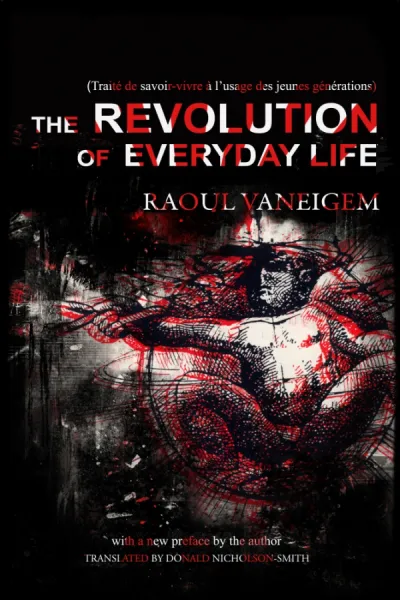
The Revolution of Everyday Life
This treatise offers a lyrical and aphoristic critique of the "society of the spectacle" from the point of view of individual experience.

Talking Anarchy
Talking Anarchy is a discussion of the ups and downs of the anarchist movement during the last century, including the many famous characters who were anarchists, or associated with the movement.
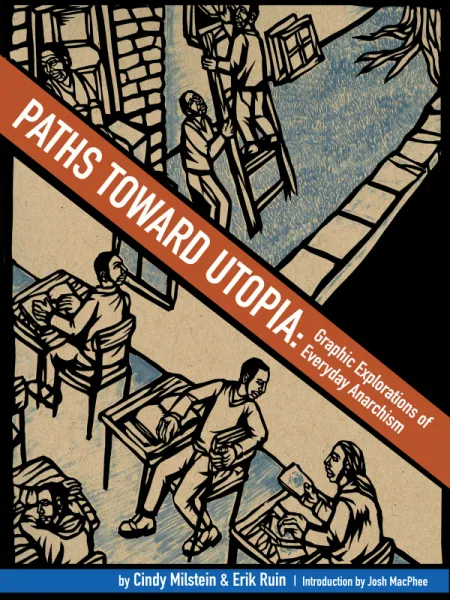
Paths toward Utopia: Graphic Explorations of Everyday Anarchism
Consisting of intricate yet bold paper-cut and scratch-board picture-essays that weave poetic words suggesting some of the here-and-now practices that prefigure the self-organization in an egalitarian society.

Demanding the Impossible: A History of Anarchism
Navigating the broad "river of anarchy," from Taoism to Situationism, from anarcho-syndicalists to anarcha-feminists, this volume is an authoritative and lively study of a widely misunderstood subject.