
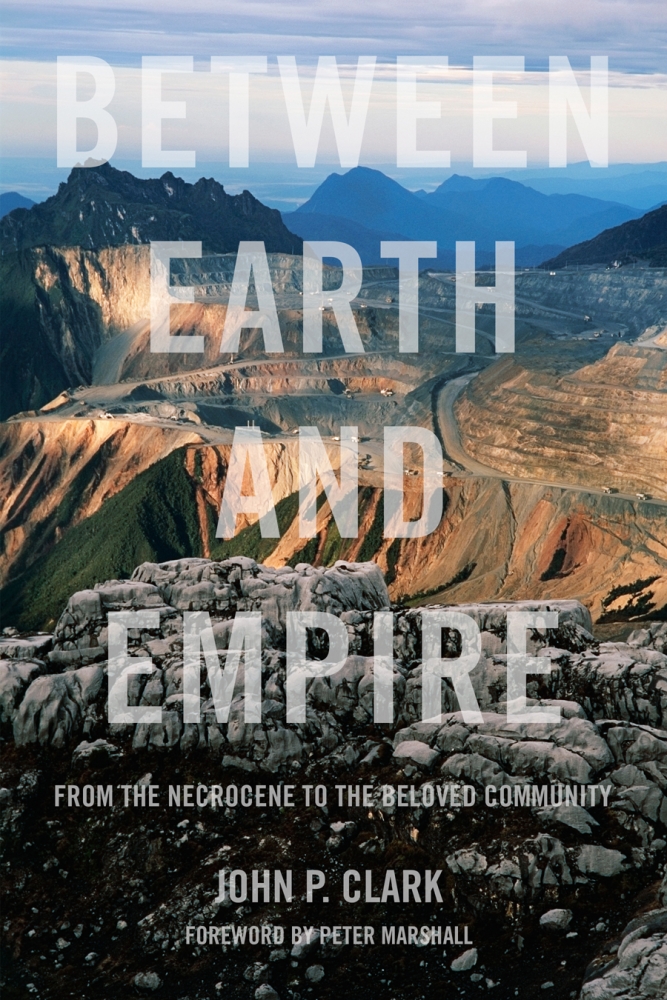
Between Earth and Empire: From the Necrocene to the Beloved Community
Please select all options before adding to cart.
Between Earth and Empire focuses on the crucial position of humanity at the present moment in Earth history. We are now in the midst of the Necrocene, an epoch of death and mass extinction. Nearing the end of the long history of Empire and domination, we are faced with the choice of either continuing the path of social and ecological disintegration or initiating a new era of social and ecological regeneration.
The book shows that conventional approaches to global crisis on both the right and the left have succumbed to processes of denial and disavowal, either rejecting the reality of crisis entirely or substituting ineffectual but comforting gestures and images for deep, systemic social transformation. It is argued that a large-scale social and ecological regeneration must be rooted in communities of liberation and solidarity, fostering personal and group transformation so that a culture of awakening and care can emerge.
Between Earth and Empire explores examples of significant progress in this direction, including the Zapatista movement in Chiapas, the Democratic Autonomy Movement in Rojava, indigenous movements in defense of the commons, the solidarity economy movement, and efforts to create liberated base communities and affinity groups within anarchism and other radical social movements. In the end, the book presents a vision of hope for social and ecological regeneration through the rebirth of a libertarian and communitarian social imaginary, and the flourishing of a free cooperative community globally.
Praise:
“Whether in Rojava, where women are fighting for their people’s survival, or in the loss and terror of New Orleans after the Katrina flood, Clark finds models of communality, care, and hope. Finely reasoned and integrative, tracing the dialectical play of institution and ethos, ideology and imaginary, this book will speak to philosophers and activists alike.”
—Ariel Salleh, author of Ecofeminism as Politics
“Clark presents very sophisticated philosophical concepts in a style that is quite comprehensible to the general public. Each page sheds new light on our age of planetary turbulence and demolishes all pseudo-truths about it.”
—Ronald Creagh, author of American Utopias
“John Clark’s book is a measured manifesto. It is a must read for any activist or scholar concerned with the alternatives to capitalism’s ongoing war on nature.”
—Andrej Grubačić, coauthor of Living at the Edges of Capitalism
“John Clark’s Between Earth and Empire is a guide to that which is obvious yet confoundingly obscure—namely, that models of social organization based in care and cooperation are infinitely more constructive and mutually beneficial than those based in competition and conquest.”
—Alyce Santoro, conceptual/sound artist and activist
“This book is a compass, polarized in the superlative subtropiques of the Gulf Coast, orienting cardinal points in the landscapes of the Zapatistas, the Black Panther Party, the Kurdish freedom movement, and West Papua. The diamantine dialectics of freedom breathing through the pages of this book will be a decisive factor in the final battles between earth and empire, between evolution and extinction. Which side are you on?”
—Quincy Saul, cofounder of Ecosocialist Horizons, and editor of Maroon Comix
About the Contributors:
John P. Clark is a philosopher, activist, and educator. He lives and works in New Orleans, where his family has been for twelve generations. He is director of La Terre Institute for Community and Ecology, located on Bayou La Terre in the forest of coastal Mississippi. He is the author or editor of over a dozen books, including The Anarchist Moment; Anarchy, Geography, Modernity; and The Impossible Community. He writes a column for the journal Capitalism Nature Socialism and edits the cyberjournal Psychic Swamp: The Surregional Review. He was formerly Curtin Distinguished Professor of Philosophy at Loyola University.
Peter Marshall is a historian, philosopher, travel writer, and poet. He has written sixteen books, which have been translated into as many different languages, including Demanding the Impossible and William Godwin, both republished by PM Press. His circumnavigation of Africa was made into a British television series and an Italian series was based on his work on alchemy, The Philosopher’s Stone.
See and hear author interviews, book reviews, and other news on John P. Clark's page HERE
See and hear author interviews, book reviews, and other news on Peter Marshall's page HERE
You May Also Like
A Living Spirit of Revolt: The Infrapolitics of Anarchism
A Living Spirit of Revolt establishes that anarchism is today not only the most revolutionary current but, for the first time in history, the only one left.
Against Doom: A Climate Insurgency Manual
Anarchy, Geography, Modernity: Selected Writings of Elisée Reclus
A comprehensive introduction to the thought of this anarchist geographer and political theorist analyzing his sweeping historical and theoretical synthesis.
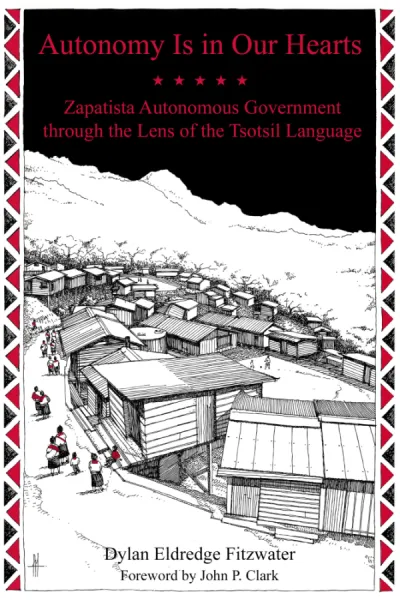
Autonomy Is in Our Hearts: Zapatista Autonomous Government through the Lens of the Tsotsil Language
Simultaneously an exposition of Tsotsil philosophy and a detailed account of Zapatista governance structures, this book is an indispensable commentary on the Zapatista movement of today.
Catastrophism: The Apocalyptic Politics of Collapse and Rebirth
Catastrophism explores the politics of apocalypse and examines why the lens of catastrophe can distort our understanding and impede our ability to transform the world.
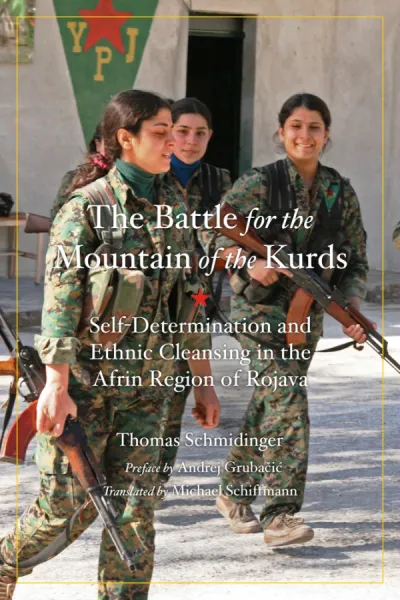
The Battle for the Mountain of the Kurds: Self-Determination and Ethnic Cleansing in the Afrin Region of Rojava
This book gives an account of the history and the present situation of the Canton of Afrin along with interviews with the inhabitants.